Course Description
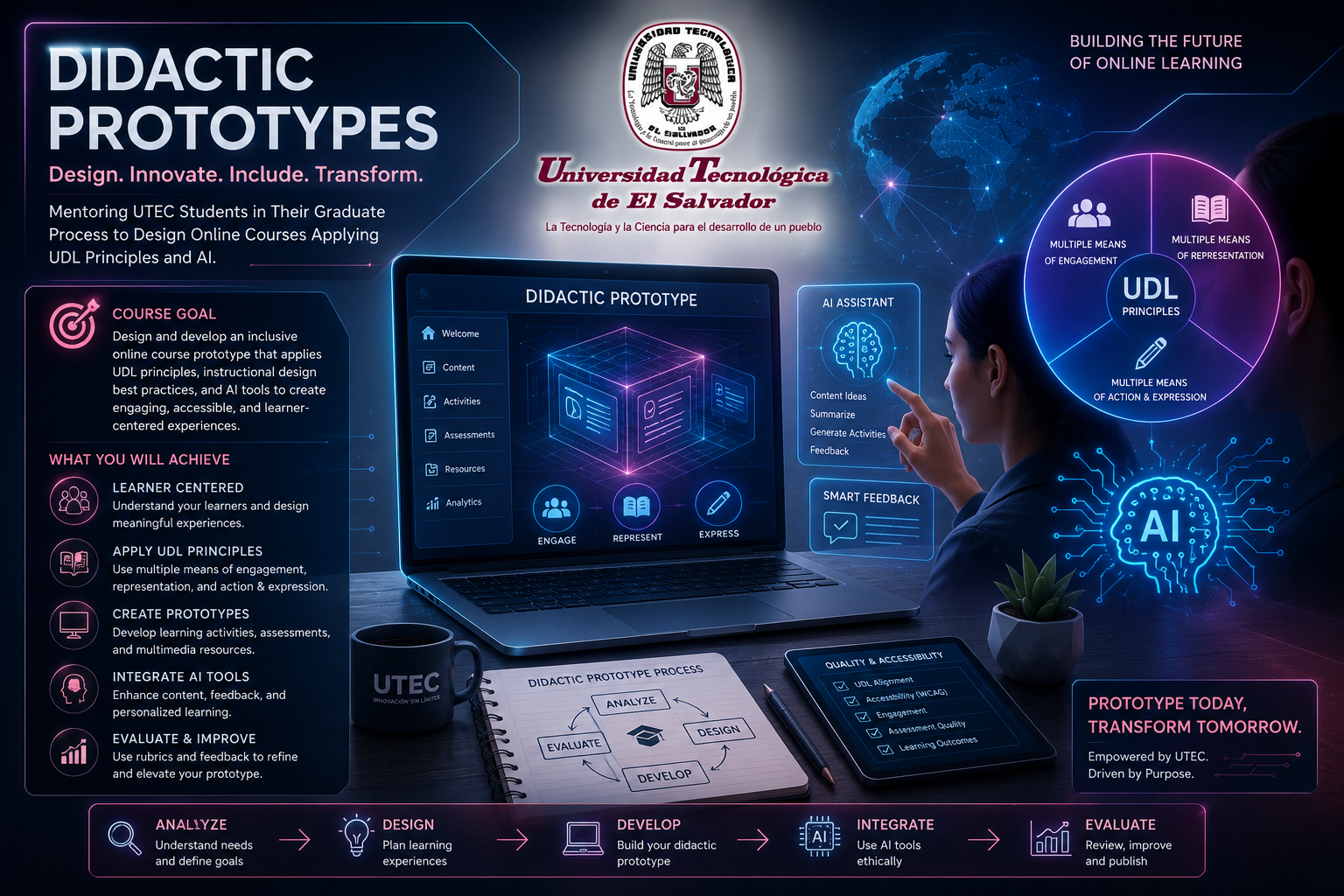
The Didactic Prototypes course is designed to mentor UTEC students throughout their graduation process by guiding them in the design and development of an online course prototype. Using evidence-based instructional design practices, Universal Design for Learning (UDL) principles, and artificial intelligence (AI) tools, students will create an inclusive, engaging, and accessible online learning experience. Through a hands-on, project-based approach, participants will analyze learner needs, align learning outcomes with assessments and instructional activities, integrate educational technologies, and evaluate their prototypes using recognized quality standards. By the end of the course, students will have developed a complete didactic prototype that demonstrates readiness for implementation in higher education.
General Learning Objective
Design and develop an inclusive online course prototype that applies Universal Design for Learning (UDL) principles, instructional design best practices, and artificial intelligence (AI) tools to create an engaging, accessible, and learner-centered educational experience.
Specific Learning Objectives
By the end of this course, students will be able to:
- Analyze learner characteristics, instructional needs, and course requirements to establish measurable learning outcomes aligned with UDL principles.
- Design a structured online learning experience that incorporates multiple means of engagement, representation, and action and expression to support diverse learners.
- Develop a didactic prototype that includes learning materials, instructional activities, assessments, and educational technologies aligned with the course learning outcomes.
- Integrate artificial intelligence (AI) tools ethically and effectively to enhance instructional design, content creation, learner support, and formative feedback.
- Evaluate and revise the didactic prototype using a quality assurance rubric and UDL guidelines to improve accessibility, learner engagement, instructional effectiveness, and overall course quality.
- Teacher: JULIO ANIBAL BLANCO ESCOBAR
- Teacher: RINA NATALIA ORTEGA MELARA